A mission discovered one question at a time
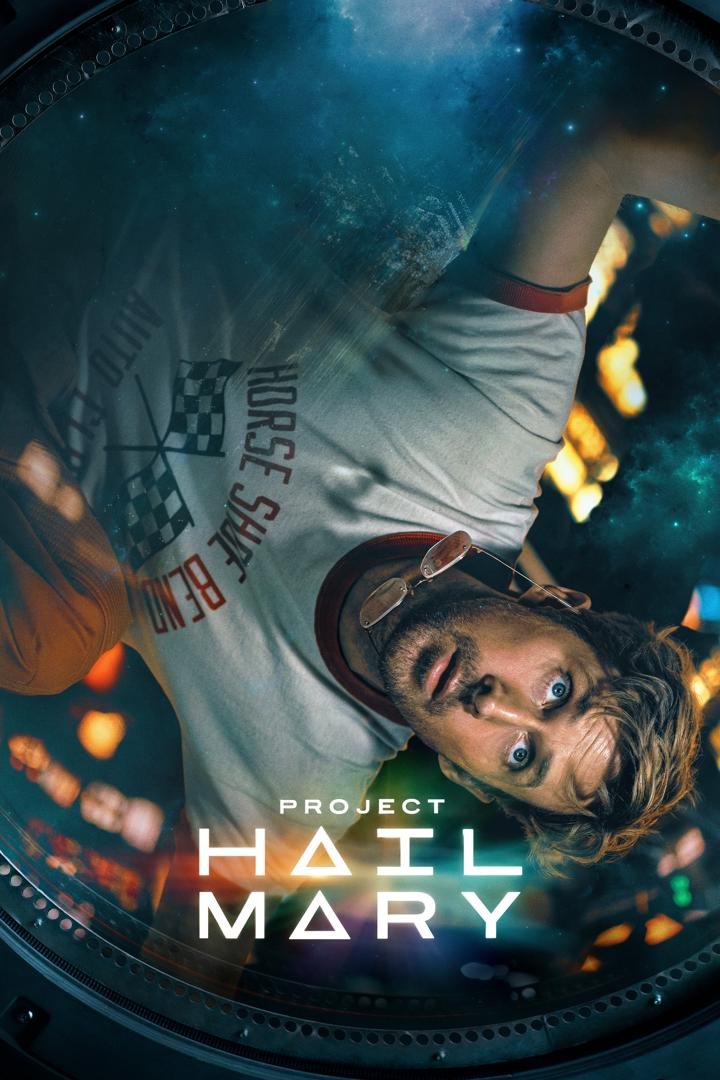
Ryland Grace wakes on a spacecraft without the memory needed to explain his situation. Before he can solve the larger problem that brought him there, he must establish basic facts about himself and the place around him. Recovering his past and investigating his present therefore become connected forms of discovery.
The mission concerns a threat to the Sun and, through it, to life on Earth. Grace's scientific knowledge gives him a way to respond, but knowing how to investigate something is not the same as already knowing the answer. The premise makes observation, experiments and revised explanations part of the adventure rather than placing all the important action outside the scientific work.
From Andy Weir's novel to the screen
Ryan Gosling plays Grace and Sandra Hüller plays Eva Stratt. James Ortiz performs Rocky, a being Grace encounters during the mission, while Lionel Boyce plays Carl. Phil Lord and Christopher Miller direct, with Drew Goddard adapting Andy Weir's novel. Gosling is also among the producers.
Reading the book beforehand is optional. The film's opening situation is designed around information Grace himself needs to recover, so approaching it without a complete outline is a natural choice. Readers can instead enjoy comparing the treatment of scientific explanations, memory and communication, while remembering that a screen adaptation uses different tools from a prose narrative.
Science fiction with cooperation at stake
The US PG-13 classification cites thematic material and suggestive references. At two hours and thirty-six minutes, it is a longer feature, suitable for a viewing window that leaves room for the mission to develop. The scientific premise does not require advanced technical training to understand the character's central problem.
A useful question afterwards is what cooperation requires before people can share a language or a familiar way of understanding the world. Another is how uncertainty changes when it is treated as something to investigate rather than something to conceal. Those questions connect the enormous scale of the mission to ordinary habits of curiosity, trust and learning from mistakes.