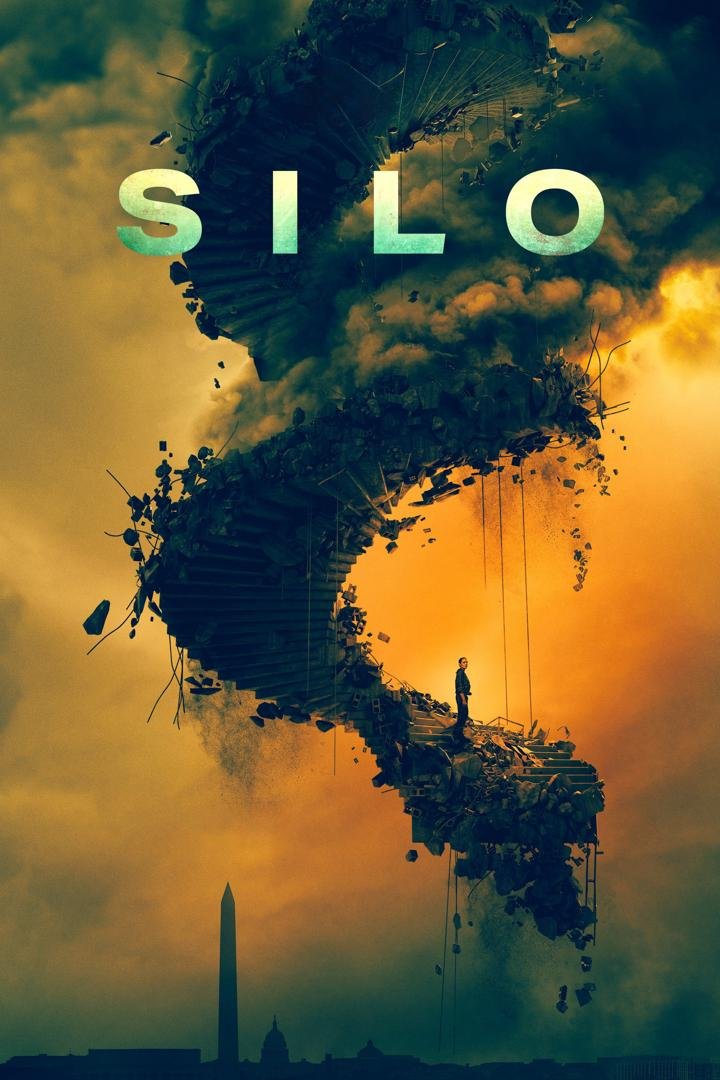
An entire society inside one building
The silo is more than an unusual location for a mystery. It combines housing, employment, government and the infrastructure needed to stay alive. That makes an argument about a broken machine potentially inseparable from an argument about power. When residents cannot simply move elsewhere, the people controlling information also influence the limits of everyone's imaginable future.
A useful question to carry through the opening is who can check an official explanation. A rule might be sensible, mistaken or deliberately misleading, but most residents lack an independent way to distinguish those possibilities. The drama grows from that imbalance. Curiosity becomes consequential because asking for evidence can disrupt a system on which the questioner also depends.
Why Juliette's work matters
Rebecca Ferguson plays Juliette Nichols, whose engineering work gives the story a practical point of entry. She approaches problems through mechanisms, failures and things that can be tested. Read against the silo's official narratives, that professional habit creates an interesting tension: a convincing explanation still needs to survive contact with the machinery and the people who operate it.
The ensemble connects her investigation to different parts of the community. Tim Robbins plays Bernard Holland, Common plays Robert Sims and Harriet Walter plays Martha Walker. Their positions around administration, security and technical work give viewers several ways to think about the same society. Pay attention to what each character is responsible for protecting, as well as what they say.
Books, viewing order and avoiding spoilers
Graham Yost developed the television series from Hugh Howey's Silo novels. The books are an alternative route into this world, but reading them first is unnecessary. For a first visit, the show's opening episodes introduce its boundaries through the residents themselves. Starting midway would remove the gradual process of learning which assumptions the characters share and which they begin questioning.
Follow the episodes in their listed season order and treat later-season promotional descriptions carefully; even an official synopsis can disclose the outcome of an earlier mystery. This is a strong candidate for viewers who enjoy confined societies, institutional secrets and practical problem-solving within speculative fiction. The central attraction is discovering how a supposedly complete explanation of the world starts to develop cracks.