Ordinary people against royal power
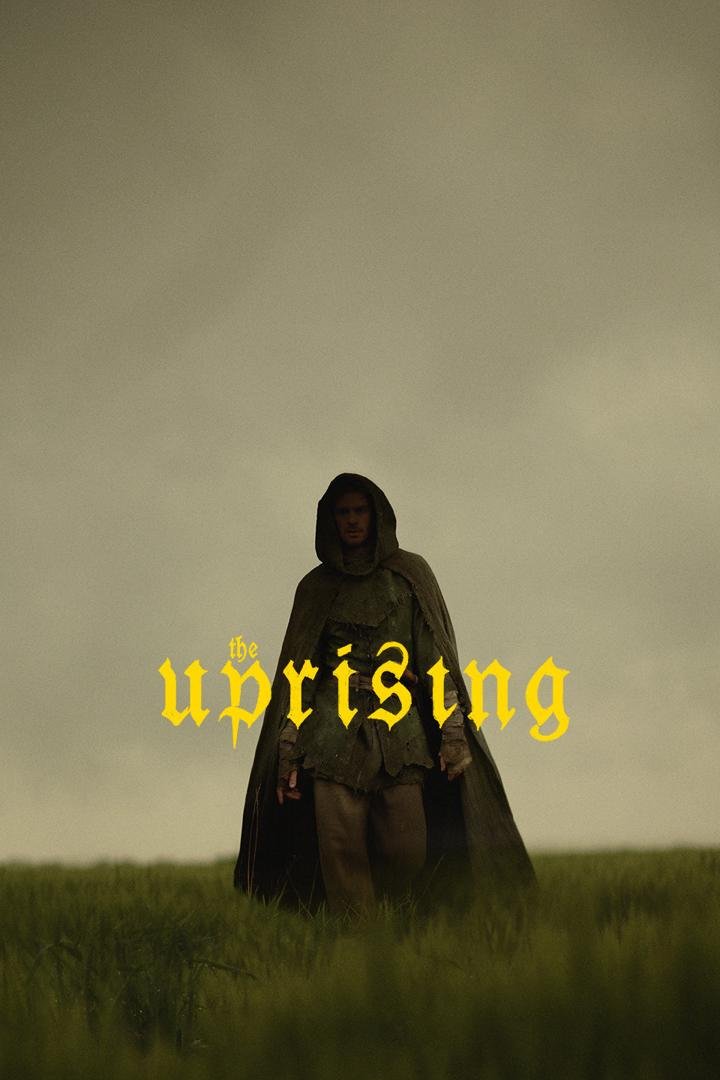
The Uprising places its central characters within the revolt against Richard II's rule in medieval England. The dramatic imbalance is straightforward: people with limited individual power attempt to organise against institutions built to keep authority above them. Their decision to act collectively turns everyday grievances into a challenge the ruling order must confront.
That makes organisation as important to the premise as open conflict. A group can share anger without agreeing on methods, leaders or the future it wants. Watching how personal motives connect with public demands is a useful way into the story, particularly when historical spectacle might otherwise make the participants seem like anonymous parts of a crowd.
The cast and the historical frame
Andrew Garfield plays the Ploughman, Jamie Bell plays John Ball and Cosmo Jarvis plays Wat Tyler. Stephen Dillane appears as Simon Sudbury, Tom Hollander as Robert Hales and Woody Norman as Richard II. Paul Greengrass writes and directs. The historical setting is the Peasants' Revolt of 1381.
The film combines identifiable historical figures with a dramatised central perspective. It is therefore best approached as historical fiction shaped around real events, rather than as a complete factual record of the revolt. Knowing the broad division between the rebels and royal authority is sufficient preparation; detailed historical reading can follow once you want to compare particular choices in the adaptation.
What the rebellion invites you to consider
The US R classification cites violence and bloody images. This is an adult historical drama, and the struggle for justice in its premise does not mean its depiction of conflict is suitable for every viewer. Allow a little over two hours for the film itself.
For discussion, ask what turns a grievance into a movement and what happens when different members of that movement want different outcomes. Another useful question concerns leadership: does a leader represent the group, direct it or become a symbol others use for their own purposes? Those questions let the historical setting open a conversation without pretending that a dramatic scene proves a general rule about political change.