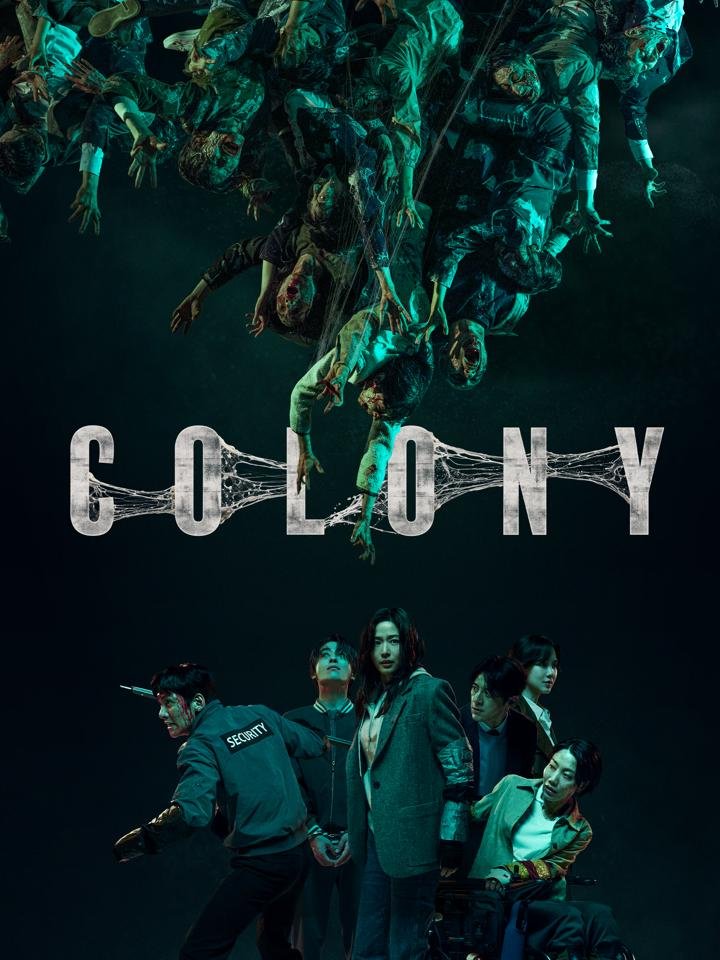
A sealed building and a changing threat
Professor Kwon Se-jeong arrives at a biotechnology conference and becomes caught in an outbreak. The authorities seal the facility, turning a site of professional exchange into an enclosed survival problem. Being inside the building means facing the infection directly while also losing the ordinary possibility of simply leaving the event.
The infected do not remain a fixed kind of danger. Their changes make observation essential, because a response that seemed useful a moment earlier may no longer be enough. Se-jeong's scientific background therefore matters alongside the practical work of keeping people alive. Understanding what is happening and finding a safe response become parts of the same immediate task.
The people inside and outside the crisis
Jun Ji-hyun plays Se-jeong, Koo Kyo-hwan plays scientist Seo Young-cheol and Ji Chang-wook plays security worker Choi Hyun-seok. Kim Sin-rok appears as Choi Hyun-hee, while Shin Hyun-been plays biotechnologist Gong Seol-hee. Yeon Sang-ho directs and shares screenplay credit with Choe Gyu-seok.
The Korean-language film belongs to the outbreak-horror tradition, but its specific setting gives the group a mixture of scientific knowledge, practical responsibilities and personal connections. Those differences can shape what each character notices first. A scientist, a security worker and someone protecting a relative need not define the most urgent problem in exactly the same way.
What to know before entering the building
The US R classification cites bloody violent content and language. The premise is therefore a choice for viewers comfortable with intense infection horror, rather than a restrained medical investigation. If you normally watch dubbed releases, check the local provider's audio and subtitle options instead of assuming every territory has the same version.
For discussion, consider how quickly expertise can become provisional when the situation keeps changing. Also watch the distinction between containment as an outside policy and survival as an inside experience. A sealed door can represent protection to one group and abandonment to another, which makes the building more than a convenient place to gather the characters.