A town's past becomes the present
Derry is more than a location to which a monster happens to come. The opening setting, in 1962, lets a different generation encounter the town and its dangers. A newly arrived family and a child's disappearance provide two ways into a place whose everyday appearance does not explain what is happening beneath it.
A prequel can make a familiar threat disturbing through context. Viewers who recognise Pennywise may be watching for connections, while the new residents must respond to what they can actually observe. That difference creates room to consider the town's habits: what people dismiss, which voices they believe and how a community explains events that should not fit its ordinary account of itself.
Connections to the films and the cast
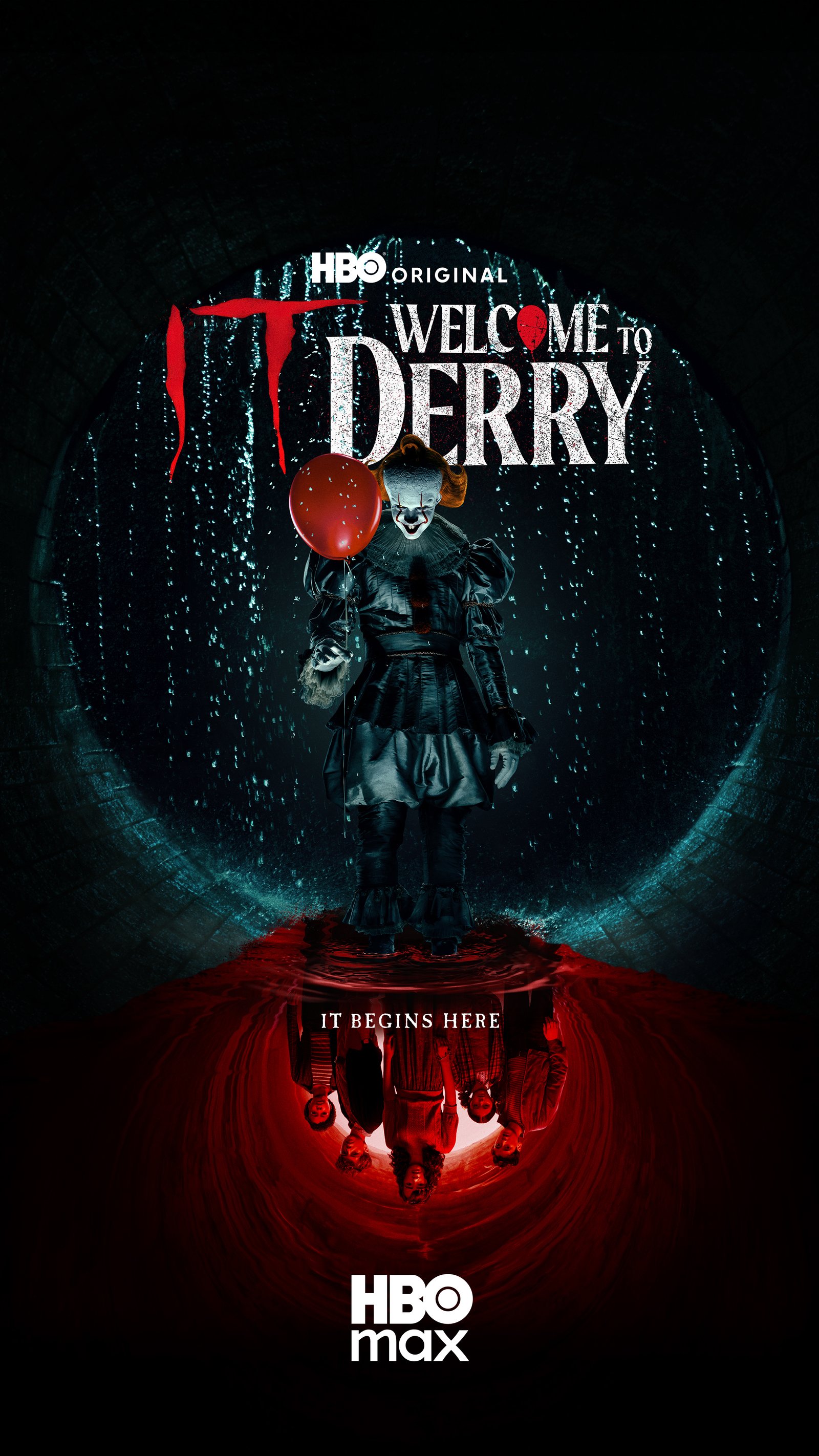
The series expands the screen world of the recent It films, with Bill Skarsgård returning as Pennywise. Andy Muschietti, Barbara Muschietti and Jason Fuchs developed this television entry from the wider story associated with Stephen King's novel. Its earlier period supplies new people and circumstances rather than simply repeating the films' principal childhood story.
Jovan Adepo plays Leroy Hanlon and Taylour Paige plays Charlotte Hanlon. Chris Chalk plays Dick Hallorann, while the wider ensemble includes James Remar, Stephen Rider and Matilda Lawler. The mixture of adults and younger characters allows the same place to be experienced from very different positions of power and credibility.
Choosing an entry point
If you want to discover this version of Derry in release order, begin with It and It Chapter Two, then move to the series. If the earlier historical setting is what attracts you, the series has its own opening situation. In either case, keep the television episodes in order and avoid complete franchise timelines that reveal later connections.
This is a horror choice involving threats to children, not simply an atmospheric tour of a familiar fictional town. It may appeal if you enjoy supernatural stories in which the surrounding society matters to the terror. The question to keep in mind is not just what is frightening a particular person, but why the people around them might find it easier to look elsewhere.